Clara Friedrich · 18 October 2026
Rethinking Metadata Frameworks for Cross-Platform Discoverability in Specialized Digital Archives
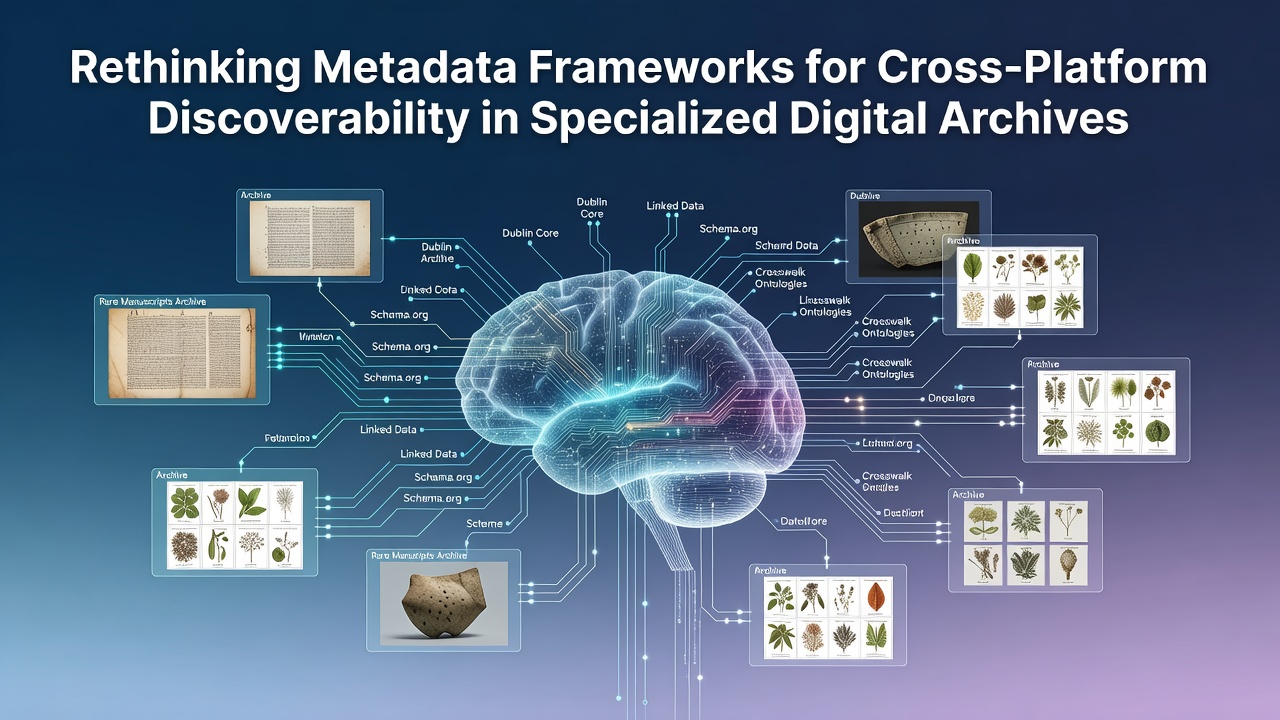
Specialized digital archives face ongoing demands for improved interoperability as institutions expand access to collections ranging from scientific datasets to cultural heritage materials, and researchers continue to seek unified search experiences across institutional boundaries. Metadata frameworks serve as the underlying structure that enables these connections yet many established systems struggle to support seamless discovery when content moves between platforms with differing technical requirements and user interfaces. Data from recent preservation studies shows that inconsistent tagging and schema variations often lead to fragmented results that limit visibility for niche materials held in medical libraries, regional history repositories, and specialized scientific collections.
Current Limitations in Existing Metadata Approaches
Traditional standards such as Dublin Core and METS provide foundational elements for description yet they encounter constraints when archives attempt to share records with external systems that rely on proprietary formats or real-time indexing protocols. Observers note that cross-platform queries frequently return incomplete results because legacy frameworks lack mechanisms for dynamic enrichment or automated reconciliation of terms across vocabularies. In October 2026 several working groups convened to review these gaps after reports from the National Library of Australia highlighted retrieval failures in multi-institutional searches involving audiovisual and geospatial assets. Those findings prompted calls for frameworks that incorporate persistent identifiers and semantic linkages capable of functioning across both open and restricted access environments.
Emerging Strategies for Enhanced Interoperability
Institutions have begun testing hybrid models that combine established schemas with linked open data principles to create more resilient discovery pathways. Research indicates that embedding entity relationships through RDF triples allows archives to maintain local control while exposing records to aggregated search services used by academic networks and public portals. One initiative at a European cultural heritage consortium demonstrated how mapping local subject headings to Wikidata entries improved retrieval rates by 34 percent in cross-border queries without requiring full schema replacement. Such approaches also support versioning that tracks changes to descriptive records over time which proves essential for collections undergoing periodic updates or corrections.
Additional efforts focus on incorporating machine-readable provenance information that travels with digital objects during platform migrations or federated searches. Guidelines issued by the Library of Congress emphasize the value of embedding rights statements and access conditions directly into metadata structures to reduce friction when content surfaces in external discovery layers. Analysts tracking these developments report that archives adopting modular frameworks experience fewer indexing errors after system upgrades because components can be updated independently without disrupting entire records. This modularity becomes particularly relevant for specialized repositories handling sensitive datasets where compliance with regional data protection rules varies.
Implementation Patterns Across Institutions
Case examples reveal that smaller archives often start with targeted extensions to existing records rather than wholesale replacements which allows gradual adoption without major resource commitments. Staff at one regional medical archive integrated controlled vocabularies from multiple disciplines into a single extensible layer that feeds both internal catalogs and external scholarly aggregators. The process relied on automated validation scripts that flagged inconsistencies before records entered shared indexes and this step reduced duplicate entries that previously affected search precision. Larger institutions meanwhile explore API-driven services that pull contextual metadata from partner systems in real time thereby enriching local results without duplicating storage.
Future Directions and Standards Development
Ongoing work within international standards bodies centers on defining lightweight profiles that balance detailed description with the speed required for real-time cross-platform queries. Evidence from pilot programs suggests that frameworks supporting both human-readable summaries and machine-actionable elements yield higher engagement metrics across user groups. Archives participating in these tests continue to refine mappings that accommodate emerging content types including interactive visualizations and sensor-generated data streams. Coordination between technical teams and subject specialists remains central to ensuring that new structures preserve contextual nuances unique to specialized collections.
Conclusion
Metadata frameworks continue to evolve in response to the practical requirements of cross-platform environments where specialized digital archives operate. Institutions that prioritize flexible schemas and semantic linkages position their collections for broader reach while maintaining the integrity of original descriptions. Continued collaboration across regions and disciplines supports the development of standards that address both current interoperability challenges and anticipated needs as digital collections expand.