
Klara Keller · 1 November 2026
Examining Voice Search Optimization Effects on Accessibility in Specialized Digital Collections
Voice search optimization has emerged as a key factor in how users interact with specialized digital collections such as museum archives, academic libraries, and historical databases, where spoken queries now account for growing portions of overall traffic according to industry reports from late 2025. Researchers note that these collections often contain unique metadata structures and domain-specific terminology that differ sharply from general web content, which creates distinct challenges when voice assistants process natural language requests. Data from multiple studies indicates that users with visual or motor impairments increasingly rely on voice interfaces to navigate these resources, yet optimization techniques originally designed for mainstream search engines sometimes overlook the precision required for rare documents or nonstandard naming conventions.
How Voice Search Reshapes Query Patterns in Niche Archives
Specialized collections typically store materials with intricate subject headings, multilingual descriptors, and cross-referenced identifiers that typed searches handle through exact matching, whereas voice queries favor conversational phrasing and semantic interpretation. Observers note that voice assistants convert spoken input into text via automatic speech recognition systems before applying ranking algorithms, a process that introduces potential mismatches when accents, proper nouns, or technical terms appear in the original records. Figures from accessibility audits conducted across North American institutions reveal that collections optimized for voice frequently incorporate schema markup and FAQ-style content blocks, which improve retrieval rates for spoken questions about specific artifacts or manuscripts.
Accessibility Benefits and Technical Barriers
Voice search delivers measurable gains for individuals who cannot use traditional keyboards or screens, since it allows hands-free navigation through layered collection interfaces. The U.S. Access Board guidelines on digital accessibility emphasize that spoken commands can reduce physical barriers, yet implementation in specialized archives requires careful attention to audio feedback mechanisms and error-handling routines that confirm results aloud. Studies show that collections lacking alt-text descriptions or structured transcripts for audio holdings often return incomplete voice results, particularly when users request items in regional dialects or lesser-known languages. Canadian research institutions have documented similar patterns, where voice-optimized metadata improves findability for users with disabilities but demands ongoing updates to speech models that handle evolving terminology in fields like paleography or ethnographic studies.
One researcher who examined European digital heritage platforms found that voice search integration increased session durations for accessibility-focused visitors by enabling direct jumps to catalog entries without menu traversal. Yet the same analysis highlighted that specialized terms such as historical place names or scientific classifications frequently trigger misrecognitions, which forces users to repeat queries or switch to text input. Data collected through 2025 demonstrates that institutions addressing these issues through phonetic indexing and synonym mapping achieve higher completion rates for complex searches involving multi-part archival references.
Integration Strategies Observed in Practice
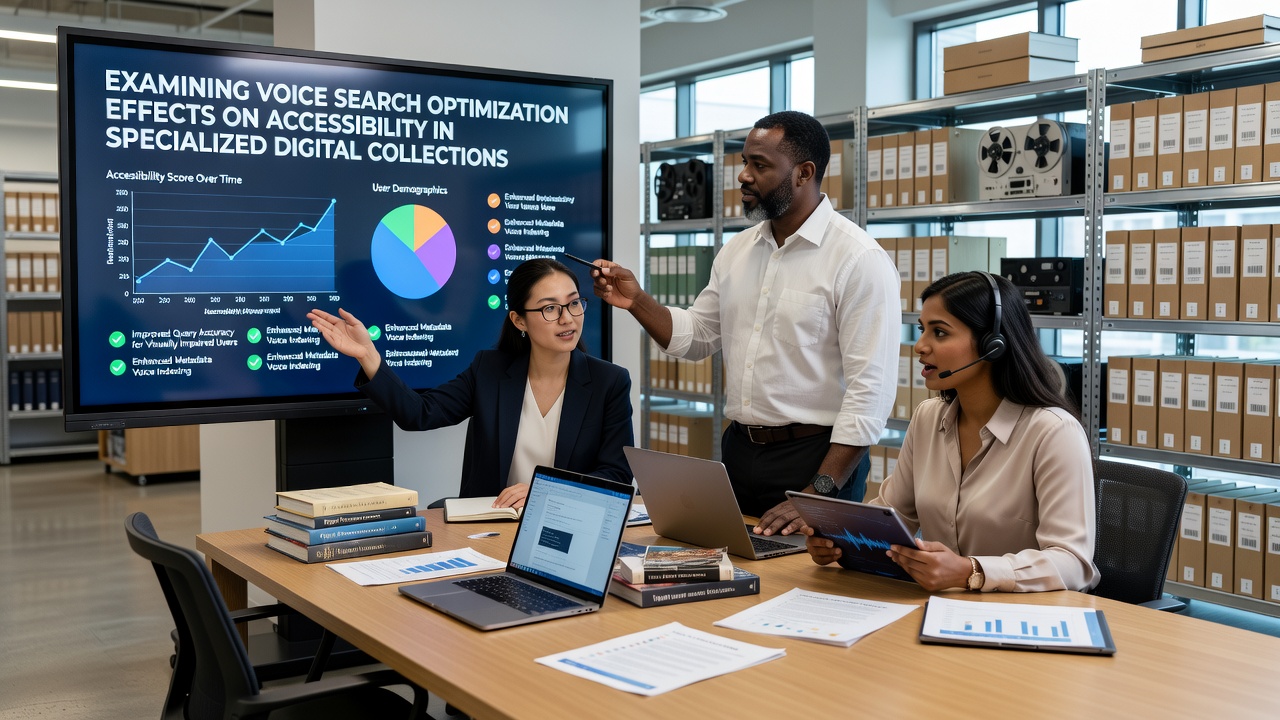
Institutions managing specialized collections have begun embedding voice-friendly elements such as question-and-answer formats derived directly from catalog records, alongside expanded natural language processing layers that account for domain vocabulary. European Union accessibility directives encourage such adaptations by requiring public digital services to support multiple input modes, and several national libraries have reported successful pilots where voice search reduced average retrieval time for visually impaired patrons. Australian academic consortia have likewise tracked improvements after aligning voice optimization with existing metadata schemas, noting that consistent application of structured data across platforms enhances compatibility with popular voice assistants. Those who've studied these implementations observe that combining voice optimization with existing screen reader protocols creates smoother experiences, although gaps remain when collections contain handwritten or image-based materials lacking machine-readable layers.
Developments Anticipated by November 2026
Standards bodies continue refining protocols that link voice search optimization more closely with accessibility benchmarks, with anticipated updates scheduled for review in November 2026. These revisions aim to address accuracy gaps in speech recognition for specialized content while expanding support for multilingual voice inputs in heritage collections. Preliminary findings shared by research networks indicate that early adopters who test hybrid indexing approaches combining phonetic and semantic matching achieve better outcomes across diverse user groups. Institutions preparing for these changes focus on auditing current voice query logs to identify recurring mismatches with archival terminology, then adjusting metadata accordingly.
Conclusion
Voice search optimization influences accessibility outcomes in specialized digital collections through changes in query handling, metadata design, and interface responsiveness. Evidence gathered from multiple regions shows measurable gains in reach for users with disabilities alongside persistent challenges related to terminology accuracy and content structure. Continued alignment between optimization practices and established accessibility frameworks supports broader participation, while ongoing technical refinements address remaining limitations in speech processing for niche materials.